



What Parents Can Do to Support Their Child During the EY1 Years
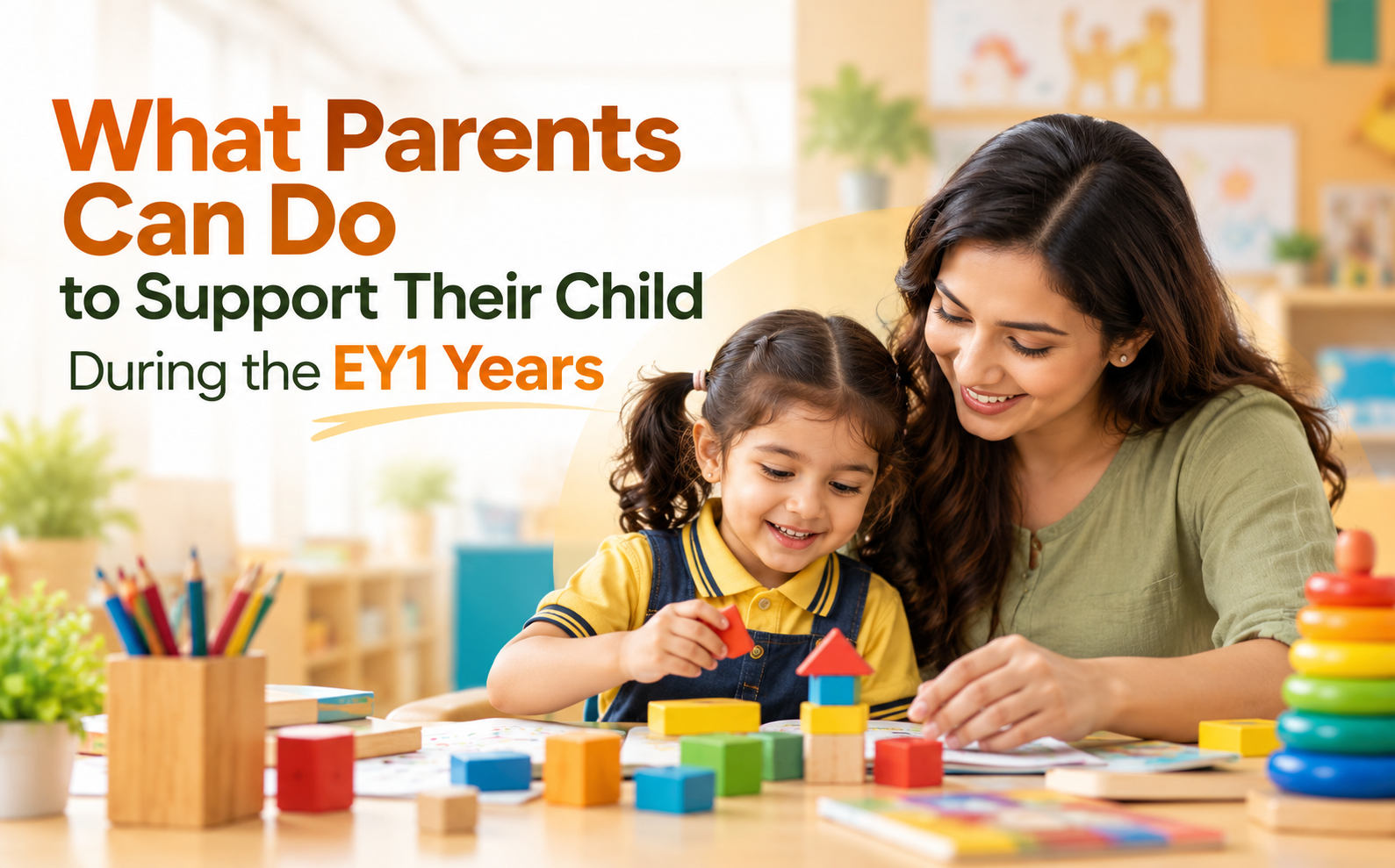
The EY1 years are a vital phase in the life of a child. Throughout this time period, the children start to identify what is happening in the world around them, express their wishes and emotions, and develop habits that lead to future learning. Nevertheless, the learning process does not limit itself to early-learning institutions. Indeed, the way that the child is treated by his/her parents plays an important role in the process of children’s development.
If parents are looking for a pre-primary school in Hyderabad, it is a great idea to learn how to support their children’s learning process from home.
1. Let Your Child Try Before Offering Help
It’s common for children to take a lengthy time even to complete very simple tasks. For example, some children may have problems putting their shoes on, opening a lunchbox, organizing some toys, or matching the pieces of a puzzle together. Although it might be hard to exhibit patience with children when you are rushing, doing so will be beneficial for the kids.
Instead of helping a child right away, allow them to try to do the task alone for a while. If they are unable to perform the task, provide a hint instead of doing it for them.
For instance, if your child can’t manage to pull a zipper, show them where to hold it and let them try it themselves.
2. Turn Everyday Conversations into Learning Opportunities
Children develop language through regular conversations, not just through books or formal activities. Talking about familiar experiences helps them connect words with real situations.
Instead of asking only, “What did you do today?”, try more specific questions such as:
- “What made you laugh today?”
- “Which activity did you enjoy?”
- “What did you notice on your way home?”
- “Was anything difficult today?”
If your child gives a short answer, continue the conversation naturally. You can share your own experiences too. This teaches children that conversations involve listening, responding, and exchanging ideas.
3. Help Your Child Recognise Emotions
Kids in EY1 can go from happy to angry at any moment. They may cry when a toy breaks, become mad when someone else takes something from them or not be able to explain what they feel.
Do not rush to correct their behavior. Rather, help them name their feelings.
For example, you can say, “You look angry that the blocks fell down. Should we try building them together again?” This way you acknowledge how they feel and offer a solution.
With time, they will learn that having feelings is normal and that there are ways to express them without fighting, crying or giving up.
4. Create Small Responsibilities at Home
It's important for children to feel important as members of the family. By giving children simple tasks, like putting away their toys and helping with small chores, they learn to become responsible and grow up independently.
You can ask your child to keep books on a shelf, to put clothes in the laundry basket, to water a flower with supervision, or to help set the table for a meal.
There is no need to expect perfect results, so it's better to value your child's efforts but not small mistakes done in the process.
5. Make Room for Boredom and Imagination
Parents often believe that children require structured activities for every moment of free time they have. Nevertheless, free time helps build imagination and independent thinking.
A simple cardboard box may serve as a bus, pillows may be mountains while some kitchen utensils can become cooking items for kids. This way kids will come up with their own games provided they get some free time.
You can be involved in the play through questions but try not to control everything. Let your kid be in charge of the process. This way they can learn proper decision-making skills.
6. Work With Teachers Instead of Comparing Progress
Each child reaches milestones at various rates. One child may feel comfortable voicing their opinion in front of a group, while another child may prefer to observe before they participate. Some children can adapt to a new schedule quickly but may take longer to verbalize their feelings.
It is essential for parents to engage with a school’s educators to discuss their child’s experiences and inquire about their respective developmental domains such as their communication, participation, movement and socialization with others.
When assessing a pre-primary school in Hyderabad, make sure the school is equipped with staff members who communicate properly with parents while understanding that each child may be in need of different types of care. Conversations between parents and teachers can help monitor the child's progress and establish common expectations.
7. Focus on Progress, Not Perfection
A child who would not share before may show progress with reminders. A child who rarely participates in discussions may reply to a question. These minor developments are significant indicators of developing skills.
Rather than saying "You are the best," say, "You waited your turn," or "You worked hard on solving a difficult puzzle." This will help the child understand what behaviors they can replicate later.
Parents should not compare one child with their siblings or classmates because it is much better to track development by means of their particular progress.
How Kiddles Academy Supports the EY1 Journey
When it comes to early learning at Kiddles Academy, it can be enhanced through age-specific activities that nurture communication, curiosity, creativity, and social skills. Parents can actually enhance the process at home by maintaining daily routines, talking about the child’s day, and allowing independent explorations.
Finding a pre-primary school in Hyderabad is more than just securing a place for their children to learn some basic ideas. It is about discovering a supportive space that helps children grow and learn alongside their families.
Parents do not need to have everything figured out; in fact, children learn best by being supported, guided patiently, given time and freedom to investigate things, and communicating with adults.
FAQs
1. What is the EY1 stage in early childhood education?
EY1 is an early learning stage that introduces children to age-appropriate activities supporting communication, creativity, social interaction, and independence.
2. How can parents support EY1 learning at home?
Parents can encourage conversation, provide simple responsibilities, read together, play imaginative games, and allow children to try everyday tasks independently.
3. Should parents teach reading and writing during EY1?
Parents can introduce books, letters, drawing, and mark-making through enjoyable activities without putting pressure on children to master formal academic skills too early.
4. How can parents help children who struggle to express their feelings?
Name emotions calmly, listen without dismissing their concerns, and help children practise simple ways to explain what they need.
5. How should parents communicate with EY1 teachers?
Ask about your child's participation, interests, social interactions, and areas where extra support at home may be helpful.
Comments (0)